

What Factors Should You Check Before Ordering Lab Water Purification Systems Online?
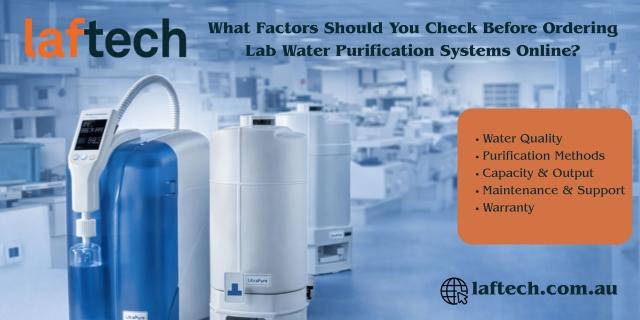
When it comes to buying Laboratory Water Purification Online, making the right choice is crucial for research accuracy, equipment longevity, and overall lab efficiency. With so many models, brands, and technologies available online, it's easier than ever to place an order—but it has also become easier to accidentally choose the wrong system. That's why understanding the key factors before purchasing is essential for both scientific reliability and cost-effective lab operations.
In this blog, we break down the most important factors to consider before ordering a lab water purification system online, guided by 2025 Google Search, EEAT, and helpful content standards. Whether you run a research facility, pharmaceutical lab, environmental testing unit, or educational institution, this guide—powered by the expertise of L.A.F. TECHNOLOGIES PTY. LTD—will help you make the right choice with confidence.
Why Choosing the Right Lab Water Purification System Matters
Water purity forms the foundation of countless laboratory applications: analytical experiments, microbiology, PCR, cell culture, environmental testing, general washing, and more. Even the slightest impurity can distort results, damage instruments, or compromise sensitive assays.
Buying Laboratory Water Purification Online offers convenience, but also demands careful evaluation to ensure the system meets your required water grade—Type I, Type II, or Type III—and supports your scientific workflow.
Let's explore the factors that truly matter.
Key Factors to Check Before Ordering Lab Water Purification Systems Online
1. Identify the Water Quality Requirements for Your Applications
Before browsing online, you must know what level of purity your lab needs. Water is categorised into:
Type I Water (Ultrapure)
Used for: HPLC, LC-MS, ICP-MS, genomics, molecular biology, and sensitive analytical applications.
Type II Water (Pure Water)
Used for: Media prep, buffer solutions, microbiology, and general analytical tasks.
Type III Water (RO Water)
Used for: Cleaning, glassware rinsing, feed water for ultrapure systems.
Why this matters:
Selecting the wrong purity level may lead to compromised results and excessive operational costs. Reputable suppliers like L.A.F. TECHNOLOGIES PTY. LTD clearly define water grades on their product pages, ensuring proper selection.
2. Check the Technology: RO, DI, UV, Ultrafiltration, or Mixed-Bed?
A high-performing laboratory water purification system typically uses a combination of purification stages, such as:
- Reverse Osmosis (RO)
- Deionization (DI) resin
- UV oxidation (185/254 nm)
- Ultrafiltration (UF)
- Activated carbon
- Final polishing cartridges
Why it matters:
Each technology targets specific contaminants—ionic, organic, microbial, or particulate—and impacts both water quality and system longevity. Always choose systems that match your contamination profile and throughput requirements.
4. Confirm Certifications and Compliance Standards
Laboratory water purification systems must comply with international laboratory and water quality standards. Key certifications include:
- ISO quality standards
- CE marking
- ASTM water standards (ASTM Type I/II/III)
- Clinical and pharmaceutical quality guidelines
Why it matters:
Non-certified systems may deliver inconsistent purity, leading to data errors or damaged instruments.
5. Understand Consumption Costs: Resin, Cartridges & Filters
When ordering Laboratory Water Purification Online, pricing goes beyond the initial purchase. Consider the cost, frequency, and availability of:
- DI cartridges
- UV lamps
- Prefilters
- Membranes
- Consumables specific to your model
Choose a system with affordable, easily available consumables, ideally supplied locally by L.A.F. TECHNOLOGIES PTY. LTD to avoid delays or compatibility issues.
6. Look for Smart Features that Improve Operation in 2025
Modern water purification systems include smart technologies such as:
- Touchscreen control panels
- Real-time water quality display (TOC, resistivity, conductivity)
- IoT remote monitoring
- Automatic sanitization cycles
- Error alerts & system diagnostics
These features greatly enhance usability, reliability, and maintenance efficiency.
7. Check Online Product Descriptions Carefully
Always review:
- Water quality output (TOC, resistivity, bacteria levels)
- Technology stages
- Consumables replacement intervals
- Installation requirements
- Warranty and AMC options
- Product dimensions and build materials
Quality brands like L.A.F. TECHNOLOGIES PTY. LTD provide detailed, transparent descriptions to support informed decisions.
8. Compare Online Pricing, Warranty & After-Sales Support
Choosing Laboratory Water Purification Online isn't only about price; it's also about long-term support.
Key things to compare:
- Warranty terms
- On-site service availability
- System uptime guarantee
- Technical assistance
- Spare part availability
A knowledgeable support team prevents downtime and ensures continuous water quality consistency.
Final Thoughts: Making the Right Choice When Buying Laboratory Water Purification Online
Ordering Laboratory Water Purification Online can be hugely convenient and efficient—provided you evaluate the right factors before purchasing. From purity level requirements and purification technologies to certifications, consumables, and supplier credibility, each element plays a critical role in ensuring your laboratory receives reliable, high-quality water.
Trusted suppliers like L.A.F. TECHNOLOGIES PTY. LTD simplified this process by offering certified, high-performance lab water systems with full technical support, detailed product descriptions, and dependable after-sales service.
By checking the factors outlined in this guide, you can confidently choose the perfect lab water purification system that supports accurate results, safe operations, and long-term efficiency.